
These assignments were written for a magazine audience in the Rhode Island area. For the course, ENG-371: Feature Writing, the research was based off of if a traveler were to visit Newport for only 24-hours. This travel piece highlighted the most unique parts about the restaurant, Diego’s. For the second post, it features a question and answer format with one of Salve Regina’s psychology professors, Dr. Balogun-Mwangi.
Follow the Red Brick Road to Diego’s: A Tex-Mex Twist on Mexican Food
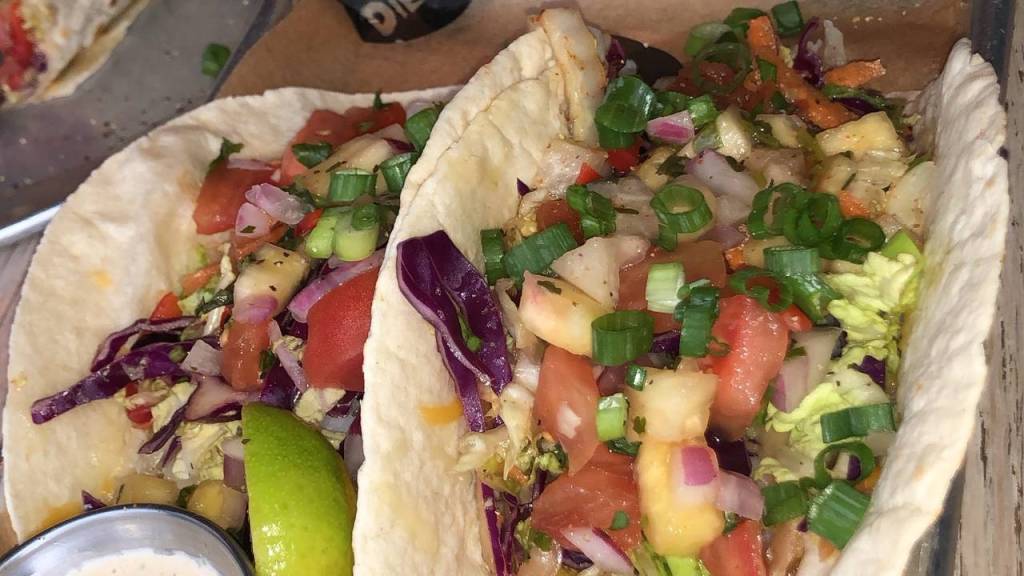
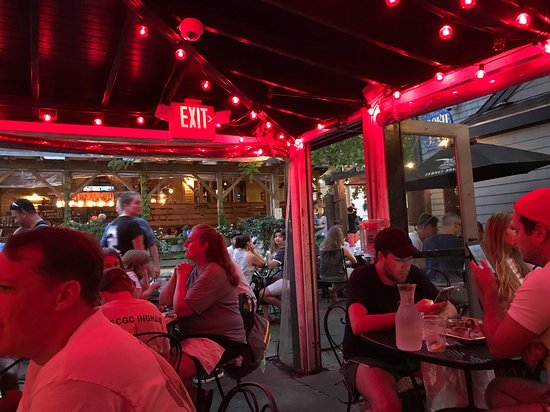
While walking through the tight alleyway of Bowen’s Wharf, the fresh smell of tacos and cooked meat spreads throughout the air. The red brick pathway leads you to Diego’s Mexican bar in Newport. Diego’s is distinguished by its big wooden arch, and welcoming outdoor entryway. While walking inside, the lighting quickly darkens, and the sounds of people talking fill the room, as you step inside the dimly lit bar. This casual, modern restaurant welcomes a chill vibe, with rock or indie music playing in the background.

Going up to the second floor, Diego’s interior is beautifully decorated with intricate white, ceramic skull decorations. The light wooden benches are surrounded by white wallpaper, covered with bright pink flowers and twisty green vines. While eating at Diego’s you can even catch a view of the sunset over the Newport Harbor.
Diego’s is known for their mouthwatering street taco, and flavorful pulled pork nachos. Their pulled pork nachos are a mix of salty and spicy while also being visually appealing. They are coated in “Diego’s aioli” and also come with pico de gallo, guacamole and cheese. They are also famous for their unique margaritas and variety of specialty cocktails. Starting at $10, you can get anything from their standard margarita to their spicy paloma margarita which includes habanero infused tequila,grapefruit juice, lime and soda water. Diego’s also includes a pitcher option for most of their margaritas and some of their cocktails, which is a perfect option when drinking with friends.

Their menu is all inclusive and features options for their vegetarian, vegan, and gluten free customers as well. Their vegan and vegetarian options are very similar to the original menu and include items such as the fried tofu tacos and spicy vegan sausage quesadilla.
Diego’s also holds a brunch option from 9AM to 1PM on Saturday’s and Sunday’s. This is a great option for tourists, or anyone wanting a great start to their day. The brunch menu includes a hearty option of “divorced eggs”, and if you like a sweeter breakfast, the classic french toast is a perfect choice. The brunch menu also has a $7 deal with special breakfast items and a purchase of an alcoholic beverage. Mocktails are also included in Diego’s specialty drinks.
When wanting to visit Diego’s Newport, you can give them a call at (401) 619-2640. Their address is 11 Bowens Wharf, Newport, RI 02840, and there is another location on 116 Aquidneck Avenue, Middletown, RI. Diego’s Newport has curbside pickup, dine-in and no delivery options. Their regular hours are from 11:30 AM-9:00 PM Monday through Thursday. 11:30 AM-10:00 PM Friday, 9:00 AM-10:00 PM Saturday, and 9:00 AM-9:30 PM Sunday. Diego’s menu and contact information can be found on their website at www.diegosnewport.com. Their instagram is @diegosnewport, and they even have an instagram page @dogsofdiegos, for all of the furry friends that visit during the day. They’re still requiring masks during COVID-19 and appreciate all social distancing.
Q&A:
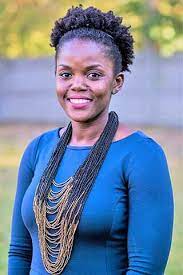
From the Heart of Kenya to the Tiny Island of Aquidneck, How Dr. Balogun-Mwangi Got Her Start
A hot day in Nigeria, where Dr. Balogun-Mwangi spent her childhood until moving to Kenya after high school. Throughout her high school years she discovered herself, “I took an elective in psychology, and that class really changed my trajectory”. She explains how that one class rearranged her life, causing her to move to Massachusetts, and complete her predoctoral experience at Harvard Medical School. While growing up in Nigeria, she experienced unique perspectives on cross-cultural psychology. By moving to the U.S, she applies her global knowledge in her classes, and research. In the interview below Balogun-Mwangi explains her daily tasks and challenges when first becoming a professor.
How did you decide you wanted to work at Salve, while still being a counseling psychologist?
“ I’ve always been interested in working as an academic, I love to teach, and as a psychologist I feel fortunate that I can do a number of different things, so my attraction to Salve was that the position… was a job as an assistant professor in cross-cultural psychology, which was something that was particularly interesting to me. After meeting people at Salve, I thought it would be a really great match, and the rest is history. I love being here, I thought it was a beautiful campus, and my department is really great!”
Explain your cross-cultural research?
“I describe my research as being focused on racial disparities in mental health and women’s mental health, looking at the intersection of that. Currently, I’ve been looking at body image among black women. We’re doing a content analysis, which is a qualitative research methodology, where we’re coding photos of models on African magazines, the highest circulating ones. I’ve done work on stigma, mental health, racial microaggressions for women who are in higher ed (education). I think the general thread is if I can focus on women I do.”
How do you manage your time?
“Not well, sometimes I feel as if I do too much. What I find helpful is to have a calendar where everything is mapped out, because there’s no way any of that lives in my head. I have separate days for different things. Mondays, I don’t come to campus, it’s a day where I see all my clients and then I teach Tuesday through Friday. As much as possible, I try to protect my weekends but I think it’s a lot of juggling, and a lot of keeping track, and I try my best. I do drop balls all the time but I’m working on that.”
Were you always interested in being a counseling psychologist?
“No, I was not always into psychology, I thought I was going to be a pharmacist, and I already applied to pharmacy programs and had gotten in… and then I took an elective in psychology, and that class changed my trajectory. I was thinking in ways I had never thought before. I was really engaged in a way that even my professor noticed. The next time I was in school, I changed my major on the first day to psychology. It was not my plan, if I never took a psychology course in high school, I would probably not be a psychologist today. ”
When did you live in Africa? Were you born there?
“I was born in Nigeria and I was there through highschool, and I went to college in Kenya in Nairobi. The first time I was in the U.S. was for graduate school, so my formative educational experiences were in Nigeria and in Kenya. In Kenya as an undergraduate, I majored in psychology. In between, I spent a year doing Nigeria’s version of the Peace Corps, where you spend a year volunteering in a particular part of the country. So I did that, and then came to grad school here, with a masters degree in clinical mental health.”
What caused you to move to the United States?
“I think for several reasons, I was old enough where my family was comfortable with a move. I would be coming to the U.S without any family here, my entire family still remains in Nigeria… I don’t know if I could have done it as seamlessly if I were younger. Up until the undergraduate level, the opportunity to graduate with a psychology degree was fairly common. At the time I was trying to get a masters degree, there weren’t a lot of programs on the African continent and there are a lot more established programs in the U.S… I think in my spirit I’m pretty adventurous, I’m fairly independent, I like to travel, I like to see new places and I thought that my training would be more sure in terms of what I would get and in terms of quality of experience.
What was your pre doctoral Intern experience like at Harvard Medical School?
“It was my best year of training ever. Psychologists have a full year of internship and it’s a pretty intense process of applying and matching to a site. I wanted to be on a site that had multiple rotations… people who were really seriously ill, but also people who were doing okay and were back in the community. Mass mental, which was affiliated with Harvard Medical School, had those types of rotations. I had a chance to do partial hospital work as well as outpatient. I got wonderful supervision from senior psychologists… I think for me it was a growing experience, and I felt like my skills as a clinician were strengthened during that year.”
What were the main differences you saw in education when moving from Nigeria to the United States? Were they similar?
“In many ways it was similar, my experience being educated in Africa was fairly unique, because I went to an American institution in Africa, my curriculum mirrored what many high schoolers take here in the U.S.. So other than the fact that I was in Africa, I was getting the same experiences as people who were undergraduates in American institutions. The translation was fairly seamless, and I learned a lot of the things that I needed to know foundationally to train, and graduate school as a psychologist.”
What were your biggest challenges when moving to the U.S.?
“I think the biggest challenge being in the U.S. as an international student, was the restriction on the things that you can do. Certainly, I didn’t want to be a financial burden on my parents but as an international student you can only work 20 hours a week on campus. So I felt really stretched financially. Fortunately, I was able to get some assistantships that paid my tuition so it took a little bit of the pressure off… There’s always the challenge of being separated from your family. I have a sister who’s eight years younger than me and I was leaving at a time when she was finishing high school, and the next time we really connected, she was already married. I felt like I missed a chunk of her life.….I live in the northeast and the cold always makes me miserable. I have not gotten over winters, I think they’re even hard for native new englanders, but as an African I feel like I struggle through them every single time.”
How To: Working Full-Time and Changing Diapers? Here’s How to Manage Becoming a Parent While Staying at Your Full-Time Job
By: Hope Badanes

Facebook comments, angry magazines and bossy blogs, all writing about how to be the “perfect” mom. Due to mommy bloggers, and strict advice on what to do and what not to do, the list of what is considered to be a “perfect” mother increases on the daily. This idea of perfection can lead mothers to have grave anxiety and increase the toll on their mental health. Does it make a difference if I breastfeed my child or not? How to know if my baby is walking at the correct age? What’s the perfect diet to feed my baby? All of these questions are asked, but the truth is there is no such thing as a “perfect mother”.
Although, frequently under debate, the idea of if a mother should work a full-time job has become more acceptable. With the power structure between men and women slowly becoming more equal, others are becoming less critical of women working full-time while raising a family.
Being a content writer at Verizon wireless, and raising two kids, for 19 years, Jillian Restrepo knows what it’s like to be a parent while managing to have a full-time job
Tip #1: Don’t Expect Anything to be Perfect
Although Restrepo is now very accomplished with her parenting skills, she wasn’t always so assured of if she would be the “perfect” mother. “People get this notion of how it’s going to be before they have their kids but then it’s different,” She says. With the multiple opinions of other moms, she took some of the advice but decided that lots of it didn’t personally work for her. “Everybody’s kinda got their opinion, so then you just take what you hear. Some of it you listen to, some of it you don’t, some of it works for you, some of it doesn’t”.
Maria Lally, An author working for the British magazine, “The Telegraph,” expands on this pressure to post picture perfect images of your family on social media in her article “There’s no Such Thing as the Perfect Mother- Let’s Drop the Guilt”.
“I often try to take Instagram-worthy pictures of my two young daughters, And more often than not, this ends with one of them refusing to look at the camera, the other smiling inanely in a way they know I find annoying” (Lally).
The nerves created during and after pregnancy are fairly common, and often lead to the lack of confidence many women face. Lally expands on her research by getting an interview from professor Sarah Schoppe-Sulliva about how mothers are less confident when they worry about what social media, and other parents will criticize them for (Lally Sullvia).
With the pressure of being a perfect parent, it is expected that you will feel some nerves when expecting your first child. Even with some mothers providing helpful, calming advice, the idea of the unknown can be petrifying.
Tip #2: Be Prepared to be Drained Emotionally and Physically
“The first kid you don’t know anything so you’re like what’s that noise? Or what’s that rash? And it’s more nerve wracking, But by the second one then you’re like oh okay, so it’s easier,” Restrepo claims about the difference in feelings when shifting from having your first child to having a second child.
Along with these nerves, the stress of working a full time job while pregnant can be the biggest hill to climb. The worst part of being pregnant while working is the physical and emotional toll it takes on a woman’s body.
“When you’re just tired, or in the end when you’re big and everything is uncomfortable, and you still have to go to work; it doesn’t matter that you don’t feel well,” Restrepo explains was the worst part about managing her work life, and her body while 9 months pregnant with her first child.
Tip #3: Work Around a Schedule and Manage your Time Well
Working around a full-time work schedule with a spouse can prove to be very difficult if not done right. “We had my parents and my husband’s parents so we could drop them off on a weekend if we wanted to do something, but without a schedule it didn’t really function too well,” Restrepo confirms when speaking about the difficulties when negotiating a schedule with her spouse. “I guess it just gets you ready for when you have kids. You’re just nonstop all the time.”
As a mother, be prepared to deal with any situation at any time. Before becoming a parent, tasks like going grocery store shopping are so much easier when you don’t have to bring two toddlers. There is going to be a constant struggle of managing your time and completing daily tasks.
“You can’t just drop and go to the store if you need something because now it’s like I need to pack two people with me… I remember one time leaving a cart in target with one of them because they were upset.”
Restrepo continues to talk about her difficulty with grocery shopping and how she managed with getting them delivered to the house through Stop and Shop’s Peapod service.
“And once they started delivering groceries to the house… it was a whole new game changer.”
Tip #4: Pride Yourself with your Kids
Although faced with many challenges along the way, the reward to parenthood can be priceless. Restrepo concludes on her time so far as a parent as being successful in the way she raised her kids,
“So I would say the greatest accomplishment is how your kids turn out as people. Not necessarily how smart they are or how tall they are, but how they treat other people and act.”
When first becoming a parent, the social pressures and the stress of managing work can make the adjustment much more difficult. With commentary from other parents and outside sources, there is always going to be something you’re “doing wrong” when raising a child. Know that every mom, rather they stay at home, or have a full time job will face different challenges when raising their children. After taking a deep breath and realizing how far you’ve come, what age your baby started walking, if they were breastfed, or if they had the most healthy diet won’t matter anymore. Knowing that you worked hard and raised your kids to be a good person is all you need.
 Hope Badanes